The State’s Argument
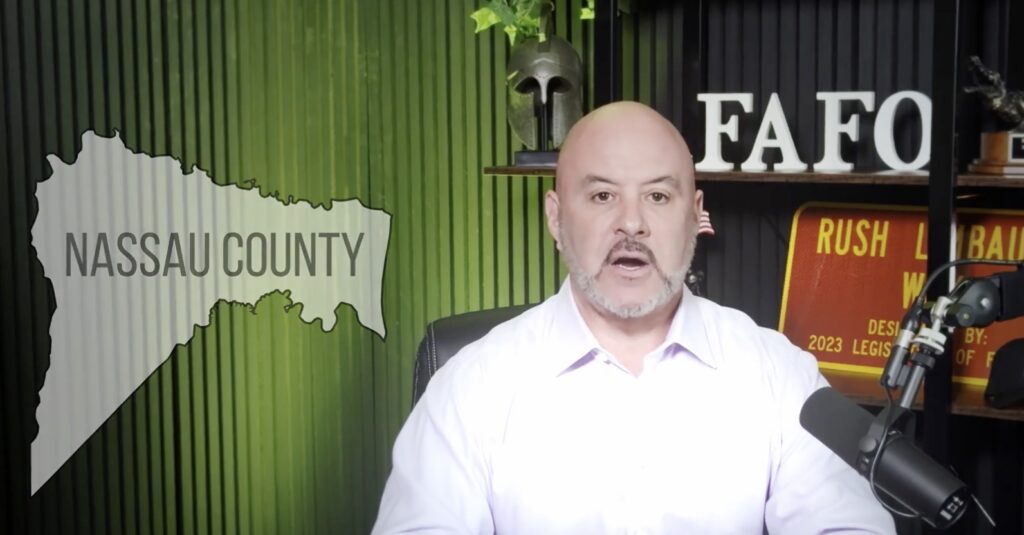
A new video released by Blaise Ingoglia is putting Nassau County squarely in the middle of Florida’s growing property tax and government spending debate.
And the numbers are getting attention fast.
As part of the state’s “FAFO” — Florida Agency for Fiscal Oversight — initiative, Ingoglia accused Nassau County of “wasteful and excessive spending,” claiming county government overspent by approximately $42.3 million in just one year alone.
The video is part of a broader statewide effort examining local government budgets and questioning whether rapidly rising property tax revenues are being spent responsibly — or simply absorbed into ever-growing government budgets.
Ingoglia made it clear that his office intends to continue going county by county across Florida examining spending practices by both Republican- and Democrat-led governments.
A Budget That Nearly Doubled
According to the video, Nassau County’s General Fund budget increased from roughly $100 million in 2020 to nearly $195 million in 2026 — an increase of more than 94% in only six years.
The state argues that while Nassau County has certainly experienced growth, spending has far outpaced what would normally be expected from population increases and inflation alone.
Using the state’s methodology, Ingoglia claims the county budget should have been closer to approximately $152 million after adjusting for inflation and population growth — not $194 million.
That difference, according to the state, represents $42.3 million in excessive spending.
And that is where the political firestorm begins.
In the video, Ingoglia argues that Nassau County taxpayers are being treated like “an endless ATM” while local governments continue expanding budgets under the banner of affordability.
He even claims that property taxes on a $300,000 home could potentially be reduced by approximately $363 annually without reducing services.
Supporters of county government will almost certainly argue there is far more to the story.
Nassau County has experienced explosive growth pressures in recent years. Roads, public safety, parks, infrastructure, staffing, insurance costs, and construction expenses have all increased dramatically. County leaders may also point to long-term planning obligations and future growth demands as justification for larger budgets.
But for many residents, the central question remains:
At what point does growth become government bloat?
The Reserve Fund Question
County officials have previously countered criticism of rising revenues by noting that portions of the additional money were placed into reserve accounts and not immediately spent.
But that explanation may raise even more questions for taxpayers.
What exactly are the limits on those reserve accounts?
How much was already sitting in reserves before additional money was added?
And are reserve funds being treated as true emergency protections — or slowly evolving into government slush funds available for future pet projects, staffing expansions, or spending that would otherwise face taxpayer resistance?
Most residents would agree that emergency storm reserves and financial safeguards are important, especially in Florida. Responsible governments should prepare for hurricanes, infrastructure emergencies, and economic downturns.
But reserves are traditionally intended to be fenced and disciplined accounts — not endless buckets of taxpayer money that continue growing simply because government keeps collecting more revenue.
Many taxpayers also believe county commissioners need a clearer understanding of what reserve accounts are actually intended to do.
Traditionally, reserve funds exist for the unexpected things government does not want — hurricanes, emergencies, economic downturns, infrastructure failures, or financial shocks.
They were never intended to become permanent holding accounts for future wish lists, expanding bureaucracy, or projects government simply hopes to pursue later.
Critics argue that in many local governments, reserves slowly evolve from emergency safeguards into dedicated funding pools for “things government wants” rather than “things taxpayers truly need.”
That distinction matters.
Because once government becomes comfortable sitting on large reserve balances, the temptation grows to spend the money simply because it is there.
And taxpayers are increasingly asking whether Nassau County is approaching that line.
Taxpayers are increasingly asking a basic question:
If government collected more money than forecasted, or if efficiencies somehow resulted in savings, why wouldn’t taxpayers receive relief in the form of lower tax burdens rather than simply maintaining the same or higher tax collections year after year?
For many families, that frustration is becoming harder to ignore.
Households across Nassau County are tightening budgets, delaying purchases, and adjusting to rising insurance, food, housing, and utility costs. Residents are increasingly asking why government appears to operate under a completely different financial reality.
Good financial stewardship matters.
Strong reserves matter.
But taxpayers also expect government to strike a balance between prudent planning and unnecessary overcollection.
That debate is now front and center.
Are Capital Projects Being Properly Managed?
Another issue quietly emerging beneath the spending debate is the growing number of large capital projects and infrastructure expansions currently underway throughout Nassau County.
Across the country, government construction projects have become notorious for delays, budget overruns, escalating change orders, and costly consultant fees.
Critics are beginning to ask whether Nassau County may be drifting into the same pattern.
The concern is not necessarily whether projects are needed.
The concern is whether the people overseeing these major expenditures have the real-world experience necessary to properly manage them before taxpayers are left holding the bag.
Many private-sector business owners know the dangers of construction projects managed without strict oversight, clear accountability, and experienced leadership. Cost overruns rarely happen all at once. They happen slowly — one change order, one delay, and one revised estimate at a time.
Some residents are already pointing to projects like the Nassau County Animal Shelter planning process and rising associated costs as examples of a government that may simply have too much money available to spend.
Whether that criticism is fair or not, taxpayers deserve transparency.
NassauFLDOGE believes residents deserve a full public accounting of major county projects currently under construction, including:
- Original projected budgets
- Current estimated costs
- Original completion timelines
- Revised completion dates
- Change orders issued
- Consultant and engineering fees
- Total taxpayer exposure
- Who is accountable for oversight
If the spending is justified, the numbers should support it.
If projects are on time and on budget, taxpayers deserve to know that too.
Transparency should not be feared.
It should be welcomed.
Taxpayers Want Answers
The bigger issue raised by the Florida CFO’s video may not simply be whether Nassau County spent too much money.
It may be whether local government has become too comfortable spending whatever revenue comes in while taxpayers carry the burden.
That frustration is growing across Florida as property values rise, tax bills increase, and residents feel squeezed from every direction.
One thing is becoming increasingly clear:
Taxpayers are no longer just asking how much government spends.
They are asking whether government is spending wisely.
And they are demanding answers.